In 2016 a report stated that the condition of
the bells was so poor and precarious that it would be inadvisable for them to continue to be
rung until extensive repairs and restoration work had been carried out.The bells fell silent but in
2019 a major restoration project (The Silent Knights Project) was launched.
The amount required to fully restore the bells was around £75,000 which was a hugh amount for a
small village the size of Hampstead Norreys to raise; with a population of just under 800 it
presented quite a significant challenge. The project was extremely fortunate to receive
a grant from the Heritage Lottery, who recognised the historical importance of preserving the
bells. Grants and donations were also gratefully received from local and national
organisations and this together with lots of local fund raising and the generosity of many local
residents, who gave significant amounts in personal donations, meant that sufficient funds
were raised within six months of the launch of the appeal.
Preparing the Bells for
Removal from the Tower
Before the bells could be removed from the tower there was a considerable amount of preparation
work to be completed.
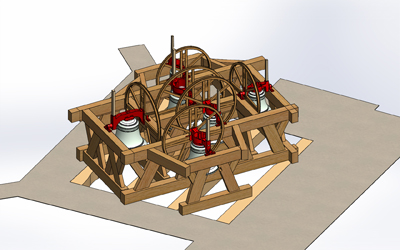
Initially a 3D survey was undertaken, and a 3D computer model of the bell frame and
bells was produced. This was necessary to determine how the bells could be manoeuvred out of the
frame and through the belfry floor for lowering to the ground.
The bells could not be moved whilst many of the larger items such as the wheels
were still attached so the bells had to be prepared ready for the bell hangers from Taylors to
visit the church and remove them.
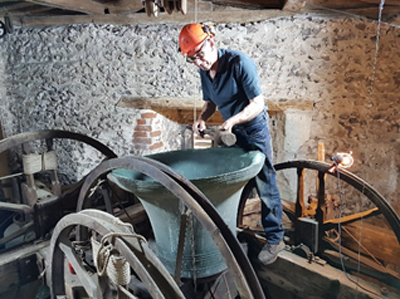
This work was carried out by local volunteers which saved the project a
considerable amount of money. The items removed were the ropes, the wheels, the clappers, the
stays, and the running boards. The wheels were returned to Taylors where they were rebuilt. The
ropes were stored to be reused, and the clappers were replaced by new ones cast at Taylors.
Removing the
Bells from the Tower
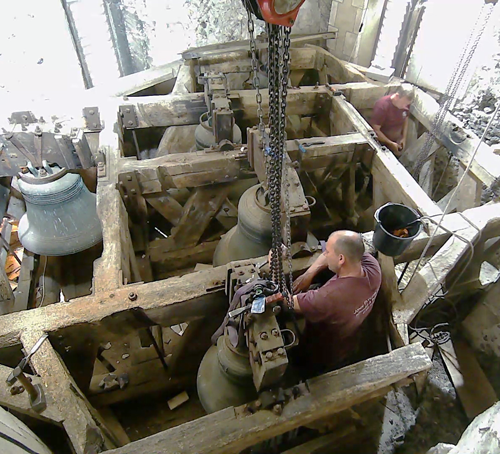
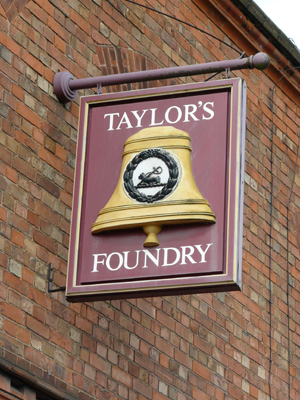
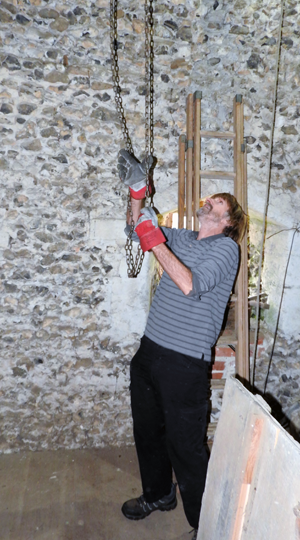
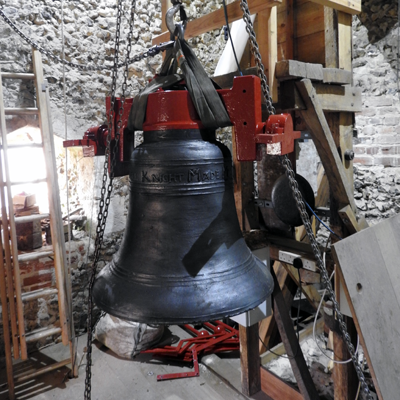
In June 2020, two bell hangers from Taylors’s started the intricate process of
removing the bells from the tower. This was the first time in 400 years that all six bells
had been lowered from the tower, at the same time, so it really was a special historical
event. Because of limited working space within the tower, two old-fashioned blocks and tackles
were used.
Two timber beams were installed at the top of the tower to which the blocks were
secured. A sling and chain were attached to each bell before lifting it out of the frame and then
lowering it safely through the narrow hatch to the floor.
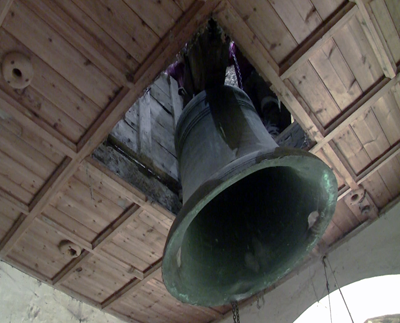
The Tenor Bell is the largest, weighing in at 510 kg, and was the trickiest one to
manoeuvre and it, literally, passed through the hatch with just a few millimetres to spare. It is a
tribute to the skills of the bell hangers that all six bells were delivered to floor level without
a scratch on them!
The Journey
Begins!
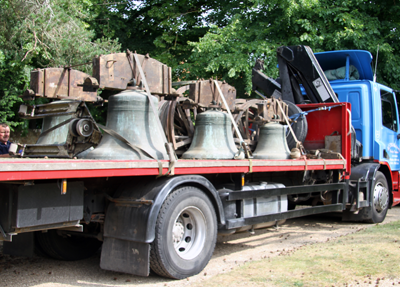
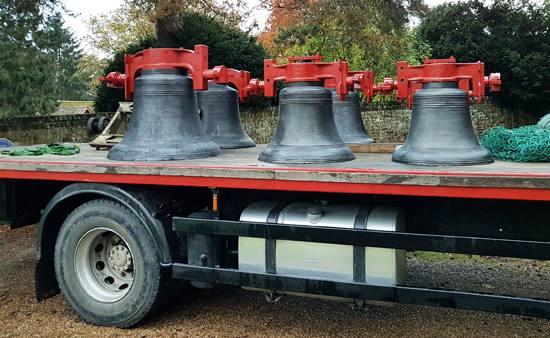
On the bright sunny morning of the 8th June 2020 the bells were loaded onto a flatbed
lorry in readiness for their journey to the foundry at Loughborough. It was a very moving
moment, for everyone gathered was aware that it was the first time since the 1600s that all the
bells had left St. Mary’s.
Foundry and
Restoration
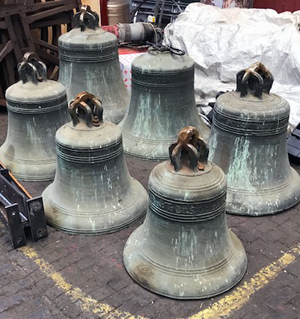
When the bells arrived at the Taylor’s foundry they were off
loaded into the workshop and allocated their own special area. One of the first tasks was to remove
the old wooden headstocks. Once these had been removed the crown (top) of the bell was clearly
visible and the retaining cannons were exposed. It can be seen in the picture that one of the bells
did not have a cannon; this was the fifth bell which was recast in 1930 by Taylor’s. Modern
castings do not normally have cast cannons as the bells are supported by a metal headstock bolted
directly onto the crown. This is how the Hampstead Norreys bells have been rehung, albeit without
the need to remove the cannons from the other five bells.
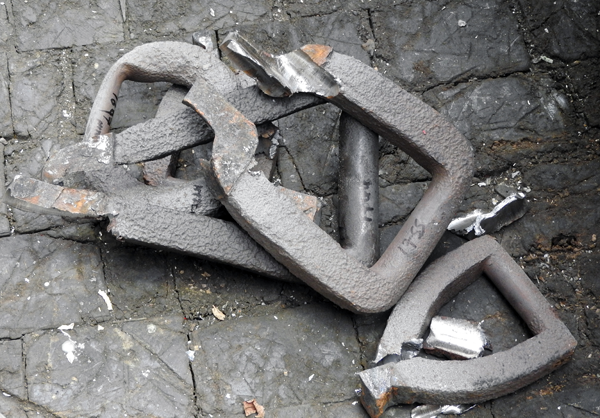
Traditional bell casting included an iron “crownstaple” cast
inside the bell to support the clapper. The problem with this method of supporting the clapper is
that the staple can rust, expand, and crack the crown of the bell.
New clappers needed to be fitted to
the bells, so the old crown staples were drilled out.
Crownstaples after removal
Drilling out old cast-in
crownstaples
Treble Bell after
Cleaning
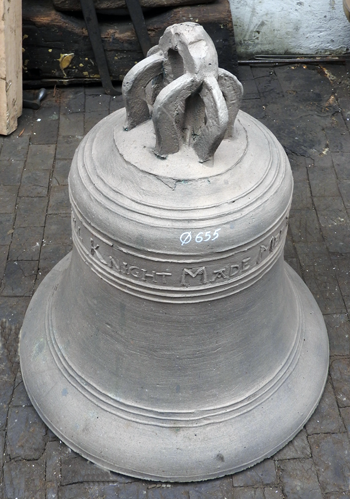
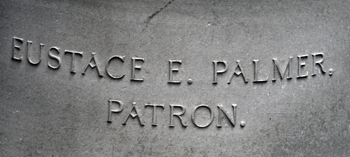
After centuries in the tower, the bells were ready for a good clean. After being sandblasted,
and all the dirt and grime removed ,the inscriptions were clear and easy to read just as they would
have been when first cast.
Inscription on recast 5th Bell
New
Headstocks
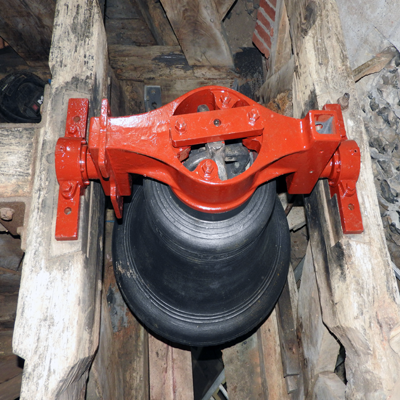
The original
headstocks were replaced by cast iron alternatives. These have the advantage of longevity, minimal
maintenance, and protection of the bells.
In the past,
some bells had their cannons removed before a metal headstock was installed but this is a solution
which would not have properly conserved these historic bells. The Hampstead Norreys bells are now
fitted with a cannon retaining design that allows the headstock to be bolted to the bell without
the removal of the original cannons. The new headstock needs to be the correct size for each bell.
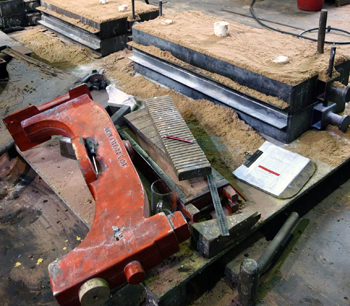
First a “pattern” of the required headstock is used to make a sand casting. This patten is placed
in a moulding box and a sand mould is made. The box is in two halves and the top half is carefully
lifted, the pattern removed, and the top half replaced.
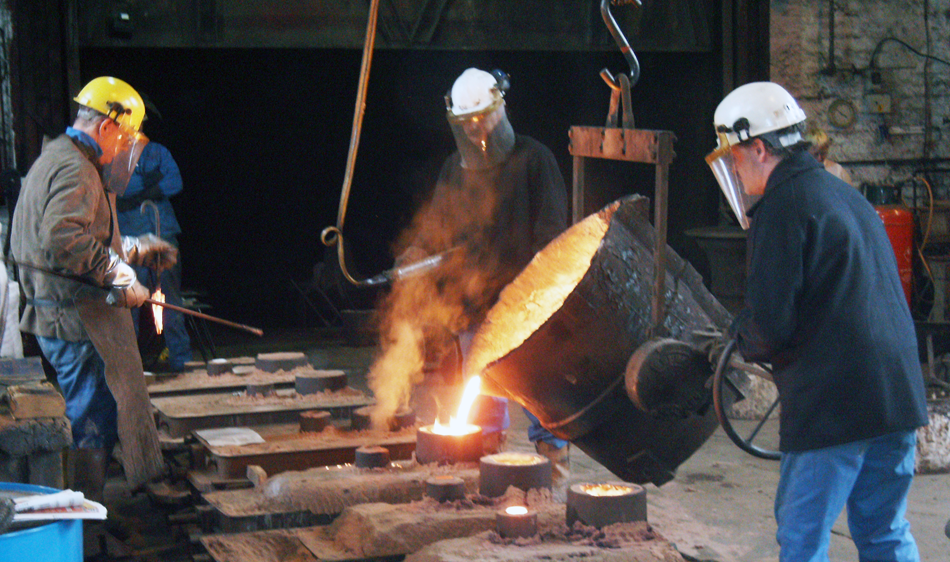
The headstock is
then cast by pouring molten iron into the sand mould.
Wooden Pattern and Sand Moulding
Boxes
Pouring molten Iron into Sand
Molds
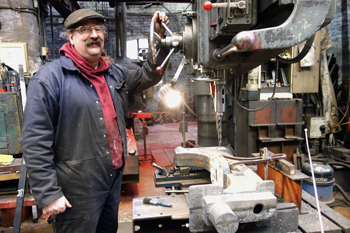
Machining a Cast
Headstock
Once the casting has cooled and been removed from the moulding box it needs to have various
fixing holes drilled. After all machining has been completed the new headstock is ready for
painting.
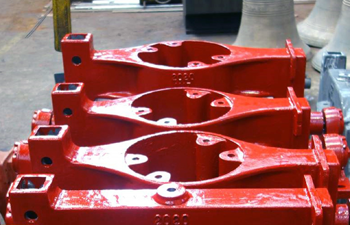
After painting the new headstock is ready to be reassembled onto the
bell.
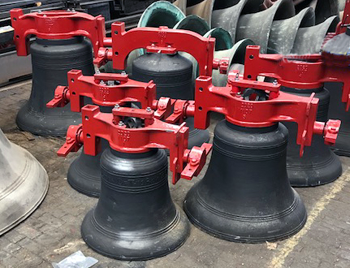
Headstocks after
Painting
Tuning the
Bells
Meanwhile work continued on the bells to improve the overall sound quality.
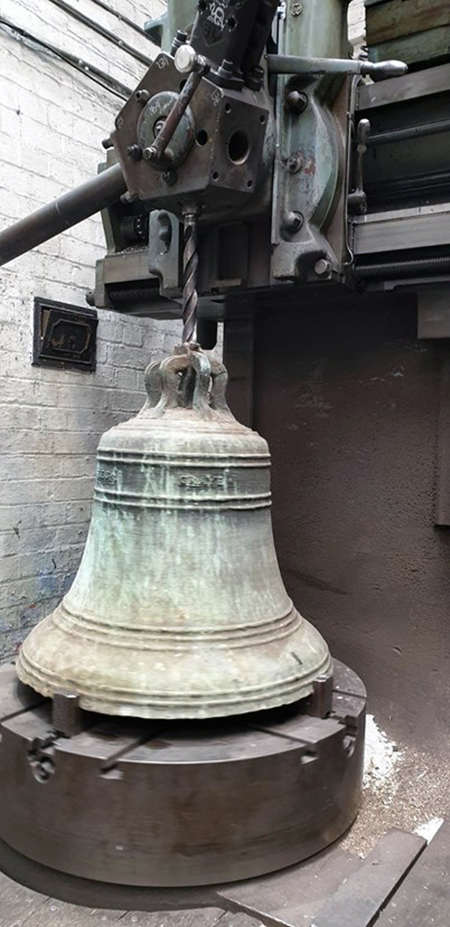
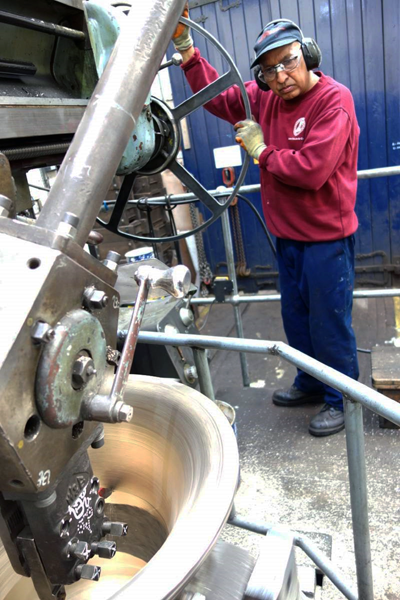
Some bells required retuning. This involves mounting the bell vertically on a lathe
and removing small amounts of metal from the inside. The tonal features of each
bell were checked with computer-based instruments until the best overall result was
obtained. This is skilled work, requiring a great deal of experience.
It should be noted that one of our bells (the 3rd) is a “maiden bell”, that is a bell
which came out of the mould in tune. These rare bells are kept for
their historical interest and are not retuned. The other bells in the peal were tuned
to this bell.
Tuning a Bell on a Vertical
Lathe
Bells assembled with New
Headstocks
The tuned bells were
then bolted to their associated headstock ready for testing.
Carpenters and
the Timber Workshop
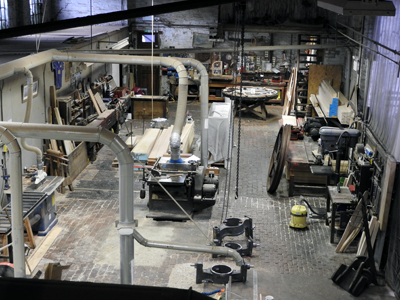
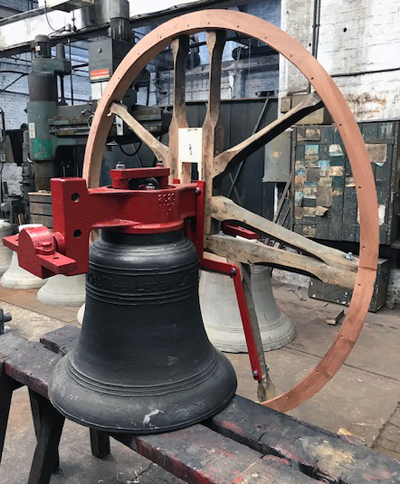
While all the metal work was being carried out in the foundry, in the timber shop
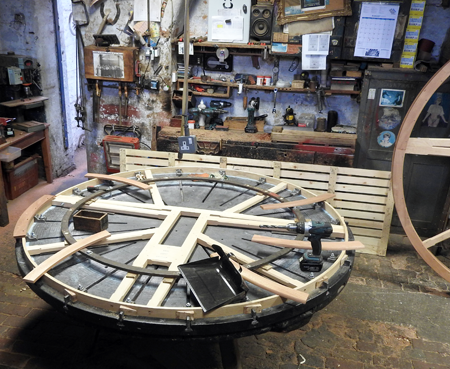
new wheels were being made. The wheels at St Mary’s were well-worn but some parts are of historical
interest, and it was decided to reuse them. The spokes were an unusual design which had been made
by a local carpenter and were still in excellent condition; these were retained, and new rims were
made before the wheels were reassembled ready for fitting to the new headstocks.
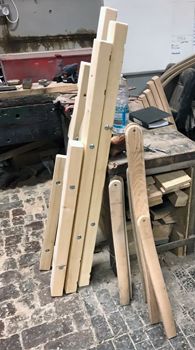
New stays, sliders and running boards were also fabricated.
New Wheels being
Assembled
New stays and
Sliders
Final Assembly
and Testing
Finally, the new wheels were fitted to the bells and headstocks ready for
testing prior to transportation back to St. Mary’s.
Final Assembly awaiting
Testing
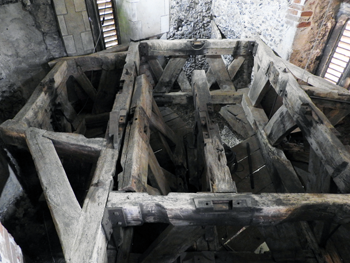
Overhauling the Bell Frame
Since 1680 the oak frame has supported the six
bells of St. Mary’s and it has been subjected to heavy work as the bells have rung out over many
centuries; this constant use resulted in considerable wear-and-tear to the
structure.
Once the bells were removed and returned to the foundry there was an opportunity to give the
frame a good clean and then a thorough inspection.
Numerous bags of dirt and debris was removed from the pit of the frame to expose the lower
timbers for the first time in many decades.
The Frame after removal of the
Bells
Decay to the
Lower Frame
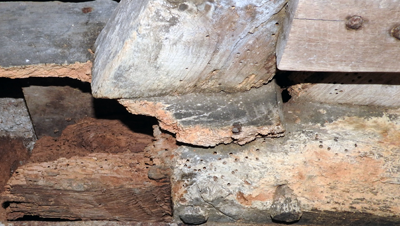
Once the debris had been removed a survey showed that parts of the lower frame had
suffered decay and rot.
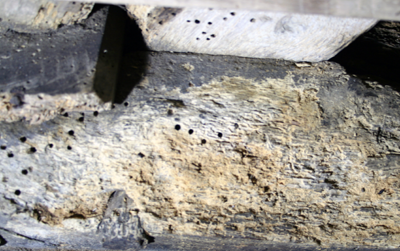
More seriously there was evidence of some localised, but active, death watch beetle infestation.
The first priority was to carry out a wood survey, by a specialist company, to establish the extent
of the beetle infestation.
The survey confirmed the presence of active death watch beetle infestation in small, localised
areas so a specialist contractor was employed to treat the affected areas.
The gaps in the timber frame caused by the combination of decay and infestation
were restored using specialist wood filing epoxy.
Death Watch Beetle Infestation
Reinforcing Cleat Installed
The original frame was constructed with simple wooden joints. Over the centuries
the joints had been weakened, due to the considerable forces exerted on them during the ringing of
the bells. As the joints became loose repairs have, overtime, been carried out using metal bracing
cleats and tie rods.
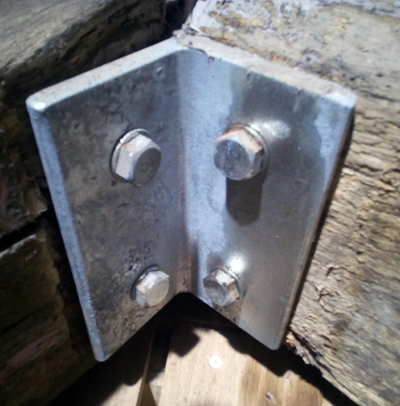
The structural report called for further reinforcement of the frame by the
installation of new metal cleats and tie rods. Cast metal cleats were made at Taylor’s foundry and
shipped to site for installation.
Once the frame had been thoroughly overalled it was ready to receive back the bells
from the foundry
The
Bells Return to St. Marys
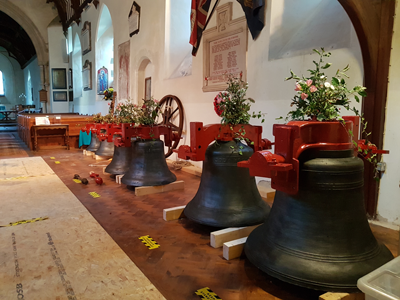
On the 23rd October 2020, the bells were returned to St. Mary’s.
They were carefully off- loaded from the flat bed lorry and lifted into position at the back
of the church. It was a momentous moment and the culmination of many months of planning and hard
work to bring the project to near-completion.
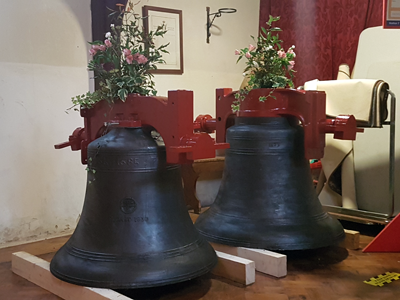
The refurbished bells were displayed at a viewing weekend, for everyone to visit
and admire the transformation. Over 400 years of dirt and grime had been removed, shiny new
headstocks and clappers fitted, and the bells retuned.
It was really a ‘once-in-a-lifetime’ occasion for people to view up close these wonderful historical
artefacts and many people took the opportunity to visit to see the set of fully restored bells and how
wonderful they looked before they were returned to the tower to be rehung for another few
centuries!
It is traditional for bells, returning to their church, to be decorated with colourful displays of
local flora and a wonderful band of volunteers worked hard to ensure that the bells looked
magnificent for their welcome return.
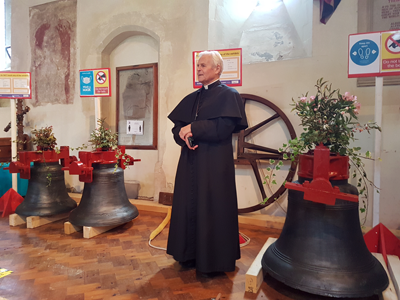
A short ‘Welcome Back’ Service, conducted by Revd. Clive Jones, included a short talk about the
history of the bells and the background to the restoration project. This was followed by Prayers and a
Blessing of thanks for their safe return.
Rehanging the
Bells
The 26th October
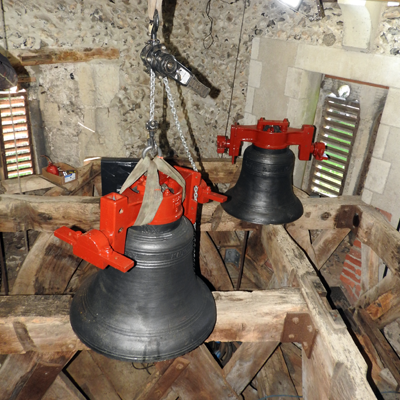
2020 was an exciting and memorable day for the village community when the bell hangers arrived to start the long and complex
process of re-hanging the refurbished bells. Each bell was gently manoeuvred into position and then
lifted from ground level up through the tower, through the clock chamber, and back up into the
belfry.
This was all achieved by three men taking turns at the slow
and strenuous work of hoisting the bells.
Once the bells had been lowered into their pits the bearing housing was securely fastened to the
bell frame. Then the new wheels, clappers, stays, sliders, and running boards were fitted. The long
bell ropes were attached and dropped the length of the tower to the ground floor ringing chamber
through new rope guides.
Lastly, to complete this first-class project a new oak floor
was installed in the belfry.
The bells were ready to be rung once more.
A Bell reaches halfway in the Clock Chamber
The Bells arrive in the Bellfry
A Bell lowered into its Pit
The Test
Ring
A final
inspection required by the Oxford Diocesan Guild of Church Bell Ringers (ODG) was carried out by
two of their Officers. As part of this, six experienced local ringers had the exciting task of
carrying out a test ring. The ODG representatives were very complimentary about how the bells now
sounded and handled. The bells were then handed back to our delighted local team of bell
ringers.
The completion
of the restoration project was achieved just two days before the country went back into lockdown
again.
You can watch
the test ring after a most success project on the video below.